
How to Fill Out Form W-9 (Line by Line)
In this guide
- What Form W-9 is
- When a client asks for a W-9
- W-9, 1099 and invoice: how they fit
- Why the name must match
- Before you start: what you need
- The form line by line
- Scenarios that cause confusion
- Examples for common situations
- SSN or EIN: which should a freelancer use?
- Spotting a fake request
- How to send a W-9 safely
- From W-9 to 1099 to your tax return
- Keeping a W-9 log
- What the client does with it
- Short answers about Form W-9
- If you are the business collecting W-9s
- Questions freelancers ask
- Mistakes to avoid
- Do you need a W-9 if you are not a US person?
- Terms on and around the form
- A worked example: Maya Chen, freelance designer
- Questions about TINs
- Your first week as a freelancer: paperwork order
- Privacy habits for tax documents
- Quick reference: which box and which number
- W-9 checklist
- Invoice first, form second, records always
If you work for yourself in the United States, sooner or later a client will say, “Can you send me your W-9?” It is a one-page IRS form, and it takes a few minutes to complete. It is also the form that most often causes small mistakes, because people are unsure what goes on each line, which number to use and where to send it.
This guide walks through Form W-9 line by line, with examples for freelancers, sole proprietors, LLCs and corporations. It explains what the form is for, what happens to it afterwards, how to send it safely and the mistakes to avoid. It is general information for US readers, and the IRS instructions for the current form are the final word. To see how the W-9 fits with your invoices and a later Form 1099-NEC, read the 1099 invoice guide.
Quick answer: Form W-9 gives a business your name, tax classification, address and taxpayer ID so it can report what it pays you. Fill in your name (line 1), business name if different (line 2), check your tax classification, add your address and your SSN or EIN, then sign and date. Give it to the client, not to the IRS.
What Form W-9 is
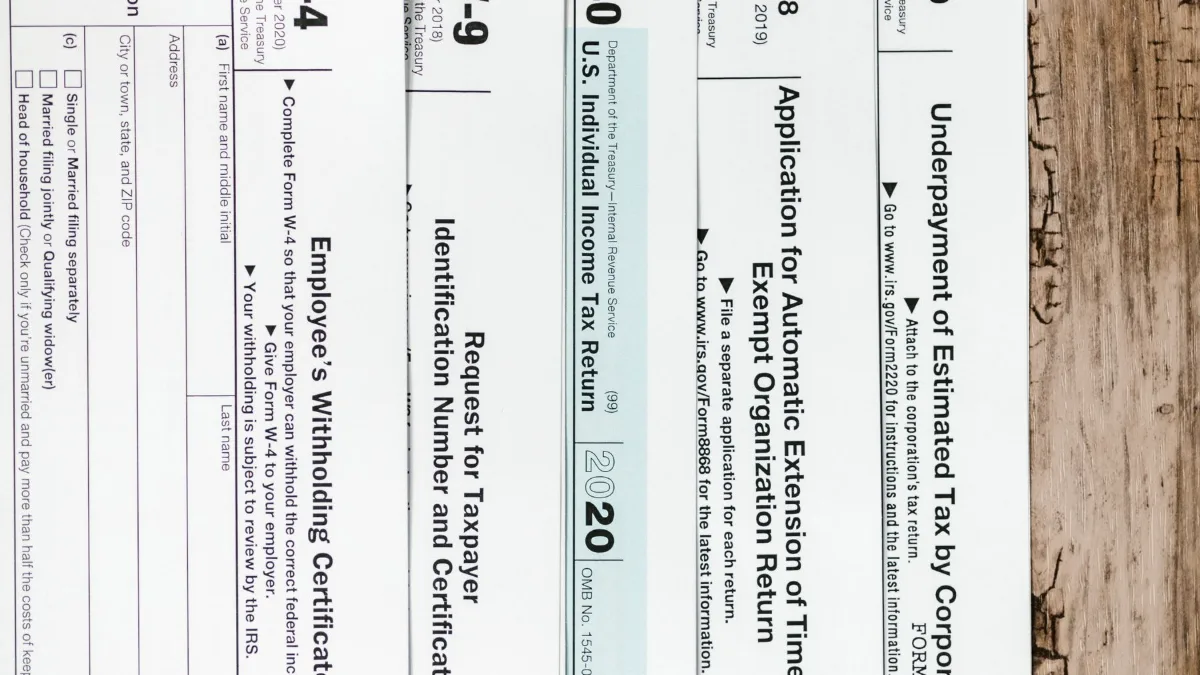
Form W-9 is titled Request for Taxpayer Identification Number and Certification. A business that pays you needs your correct name and taxpayer identification number (TIN) to report those payments to the IRS. The W-9 is how you give it to them.
| Question | Answer |
|---|---|
| Who fills it in? | A US person being paid: freelancer, contractor, landlord, sole proprietor, company |
| Who asks for it? | The business or person paying, called the requester |
| Who receives it? | The requester only. You do not file it with the IRS |
| What does the requester do with it? | Keeps it on file and uses it to prepare information returns, such as Form 1099-NEC |
| When is it needed? | Before the first payment, or when the payer asks |
| What does it cost? | Nothing. The form is free on IRS.gov |
The IRS describes the form’s purpose in its instructions for requesters, who may also use a substitute form that follows the IRS format. The version at the time of writing is the revision of March 2024, so check the date at the top of the form you are given.
When a client asks for a W-9
Not every client needs one, and the request tends to arrive at predictable moments.
| Situation | Is a W-9 usually requested? |
|---|---|
| You are a US freelancer or contractor working for a US business | Yes, before the first payment |
| You are paid through a marketplace platform | The platform collects its own tax information |
| You sell goods or services to consumers | No |
| You are an employee | No. Employers use Form W-4 |
| You are paid by a client that is an individual, not a business | Often not, unless it is a trade or business payment |
| You are a landlord receiving rent through an agent | The agent may ask |
| You are a vendor to a large company | Yes, as part of vendor onboarding |
If you are unsure whether a request is genuine, contact the client through a number or address you already know, not the one in the request.
W-9, 1099 and invoice: how they fit
People mix up these documents because they all appear around getting paid.
| Document | Who creates it | Purpose |
|---|---|---|
| Invoice | You | Ask the client for payment |
| Form W-9 | You | Give the client your taxpayer details |
| Form 1099-NEC | The client | Report to the IRS what they paid you in the year |
| Receipt | You | Confirm that payment was received |
The W-9 comes before the first payment. The 1099 comes after the year ends. The invoice sits in between and carries the money. See how to make an invoice for the invoice itself.
Why the name must match
The IRS matches the name and the taxpayer ID on information returns against its records. If they do not match, the requester can receive a notice and may have to start backup withholding.
| Entered | What the IRS has | Result |
|---|---|---|
| Maya Chen and her SSN | Maya Chen and that SSN | Match |
| Maya Chen Design and her SSN | Maya Chen and that SSN | Possible mismatch, because the business name is on line 1 |
| Maya Chen Design LLC and the LLC’s EIN | Maya Chen Design LLC and that EIN | Match, if the LLC files as a separate entity |
| Maya Chen Design LLC and Maya’s SSN | A disregarded entity owned by Maya | Match only if Maya’s name is on line 1 |
| A married name and a former-name SSN record | Name on the SSN record | Mismatch until the Social Security record is updated |
If you change your name, the Social Security Administration record and your tax return should be updated, otherwise forms may not match.
Before you start: what you need
| You need | Why |
|---|---|
| Your legal name as on your tax return | Line 1 must match what the IRS has for your TIN |
| Your business or trade name, if any | Line 2 |
| Your tax classification | Decides which box to check |
| Your mailing address | Where the 1099 will be sent |
| Your SSN or EIN | The taxpayer identification number |
| A pen or the fillable PDF | Sign and date at the end |
If you are not sure of your classification, look at how you filed your last tax return: Schedule C means sole proprietor (or single-member LLC), an S corporation files its own return, and so on.
The form line by line
The form has seven numbered lines and two parts. The layout below follows the current form.
| Line or part | What it asks | What to enter |
|---|---|---|
| Line 1 | Name of entity or individual | The name shown on your income tax return |
| Line 2 | Business name or disregarded entity name | Your business, trade or DBA name, if different; otherwise leave blank |
| Line 3a | Federal tax classification | Check one box |
| Line 3b | Foreign partners, owners or beneficiaries | Only for partnerships, trusts and estates with foreign owners |
| Line 4 | Exemptions | Exempt payee code and FATCA code, if they apply; most freelancers leave blank |
| Line 5 | Address | Street address |
| Line 6 | City, state and ZIP code | Where payments and forms are mailed |
| Line 7 | Account number(s) | Optional; the requester may use it for their own records |
| Part I | Taxpayer identification number | SSN or EIN, in the right box, not both |
| Part II | Certification and signature | Sign and date |
Line 1: your name
Enter the name that appears on your income tax return. If you are an individual or sole proprietor, this is your own name. If it is a single-member LLC treated as a disregarded entity, put the owner’s name on line 1, not the LLC’s. If the entity is a corporation or partnership, use the name on its tax return.
The most common error is putting a business name on line 1. If the name does not match the taxpayer ID, the IRS can flag a mismatch and the requester may have to start backup withholding.
Line 2: business name
Use line 2 for a business name, trade name or “doing business as” name, or the name of a disregarded entity. A freelance designer named Maya Chen who trades as Maya Chen Design writes her own name on line 1 and “Maya Chen Design” on line 2. If you have no separate business name, leave line 2 blank.
Line 3a: federal tax classification
Check one box that matches how you file.
| Box | Who checks it |
|---|---|
| Individual or sole proprietor, or single-member LLC | Freelancers, sole proprietors and single-member LLCs that have not elected corporate treatment |
| C corporation | A corporation taxed as a C corporation |
| S corporation | A corporation that has elected S status |
| Partnership | A multi-owner business taxed as a partnership |
| Trust or estate | A trust or estate |
| LLC | An LLC with its own tax classification; write C, S or P in the space provided |
| Other | Entities that do not fit the above; describe it |
A single-member LLC that has not elected to be taxed as a corporation checks the individual or sole proprietor box and puts the owner’s name on line 1. An LLC taxed as a corporation or partnership checks the LLC box and writes the classification letter.
Line 3b: foreign owners
This line applies only if you are a partnership, trust or estate with foreign partners, owners or beneficiaries and you are giving the form to a partnership, trust or estate in which you have an ownership interest. If you are a freelancer or sole proprietor, ignore it.
Line 4: exemptions
Line 4 has two spaces: exempt payee code and exemption from FATCA reporting code. They apply to certain organisations that are exempt from backup withholding or reporting, and the codes are listed in the form’s instructions. Most individuals, sole proprietors and single-member LLCs leave line 4 blank. If you are a corporation, check the instructions to see whether a code applies to you.
Lines 5 and 6: address
Enter the address where you want mail sent, including the 1099 form that the requester will prepare. It should be an address where you actually receive mail. If you move, send updated details to every client.
Line 7: account numbers
Optional. A requester can use it to identify you in their own system, such as a vendor number. You can leave it blank.
Part I: taxpayer identification number
Enter your TIN in the correct box: a Social Security number (SSN) for an individual, or an Employer Identification Number (EIN) for an entity. Do not enter both.
| Who you are | Which TIN |
|---|---|
| Individual or sole proprietor | SSN (or an EIN, if you have one for the business) |
| Single-member LLC (disregarded) | The owner’s SSN or the LLC’s EIN |
| Corporation, partnership, trust, estate | The entity’s EIN |
| Not eligible for an SSN | An ITIN (individual taxpayer identification number) |
If you have applied for a TIN but have not received it, write “Applied For” in the box. The requester can generally wait a short period, which the IRS instructions state as 60 days, before backup withholding begins if you do not provide the number.
Part II: certification
By signing, you certify under penalties of perjury that:
- The TIN on the form is correct.
- You are not subject to backup withholding, or you have been notified that you are no longer subject to it.
- You are a US citizen or other US person.
- Any FATCA code on the form is correct.
Sign and date the form. Some requesters accept electronic signatures under conditions set by the IRS. If you are unsure, ask the requester what they accept.
Scenarios that cause confusion
A freelancer who also runs an LLC for a different business. Each business has its own paperwork. Give the W-9 that matches the entity being paid for that client. A client who pays your LLC receives a W-9 in the LLC’s name or in your name, depending on the LLC’s tax treatment.
A freelancer paid by a US client while living abroad. A US citizen living abroad is still a US person and uses a W-9. A non-US citizen without US status generally uses a Form W-8 series form instead.
A contractor who becomes an S corporation mid-year. Give clients a new W-9 when the change takes effect, using the corporation’s name and EIN, and tell them the date.
A partner in a business. The partnership gives the W-9 with the partnership’s name and EIN. Each partner’s share is reported by the partnership, not on a 1099 from the clients.
| Scenario | What to do |
|---|---|
| Name changed after marriage | Update Social Security, then send new W-9s |
| New address | Send an updated W-9 to clients who send you forms |
| Business closed | Tell clients; no new W-9 needed unless you start another |
| Moved from sole proprietor to LLC (default treatment) | Often the same TIN; update line 2 and tell clients |
| Moved to S corporation | New W-9 with the corporation’s EIN |
Examples for common situations
| Situation | Line 1 | Line 2 | Line 3a | TIN |
|---|---|---|---|---|
| Freelancer, no business name | Maya Chen | blank | Individual or sole proprietor | SSN or EIN |
| Freelancer trading as “Maya Chen Design” | Maya Chen | Maya Chen Design | Individual or sole proprietor | SSN or EIN |
| Single-member LLC, default tax treatment | Maya Chen | Maya Chen Design LLC | Individual or sole proprietor | Owner’s SSN or the LLC’s EIN |
| LLC taxed as an S corporation | Maya Chen Design LLC | blank | LLC, write S | The LLC’s EIN |
| S corporation | Chen Design Inc. | blank | S corporation | The company’s EIN |
| Two-person partnership | Chen and Carter Partnership | blank | Partnership | The partnership’s EIN |
Whenever the entity type changes, such as moving from sole proprietor to LLC or incorporating, give your clients a new W-9.
SSN or EIN: which should a freelancer use?
A sole proprietor can use either. The difference is privacy and convenience.
| SSN | EIN | |
|---|---|---|
| Who it identifies | You personally | Your business |
| Cost to get | Already have one | Free from the IRS |
| Privacy | Shared with every client who has your W-9 | Keeps your SSN off client files |
| Needed for | Everyone | Required if you have employees, and useful for business bank accounts |
Many freelancers obtain a free EIN so they can give clients their EIN instead of their Social Security number. It is a free application through the IRS; be careful of websites that charge for it.
Spotting a fake request
Requests for W-9s are used in scams because they ask for sensitive information. A few signs should make you stop.
| Warning sign | Why it matters |
|---|---|
| A request from someone you have not agreed to work with | You do not owe a W-9 to a stranger |
| A free email address pretending to be a company | Fraudsters often use lookalike addresses |
| Urgency or threats about withholding | Pressure is a common scam tactic |
| A link to a form on an unfamiliar site | It may harvest your details |
| A request to send your TIN in the body of an email | Legitimate payers use a form and a secure method |
| A payer asking for bank details and your SSN together | Be extra careful and verify by phone |
If in doubt, call the company using a number from their official website and confirm the request before sending anything.
How to send a W-9 safely
A W-9 contains your name, address and taxpayer ID, which is exactly what identity thieves want. A few precautions help.
| Do | Don’t |
|---|---|
| Send it only to a business you have agreed to work with | Send it in response to an unexpected request |
| Use a secure portal or an encrypted or password-protected file | Post it in a public folder or chat |
| Send the password separately | Put the password in the same email |
| Keep a record of who you sent it to and when | Reuse a copy with an old address |
| Check that the request really comes from the client’s accounts team | Rely only on a name in an email |
It is also worth looking at how your clients store forms: reputable businesses keep W-9s in an access-controlled place.
From W-9 to 1099 to your tax return
The W-9 starts a chain that ends on your tax return. Seeing the whole path makes the form feel less abstract.
| When | What happens | Your job |
|---|---|---|
| Before work | You give the W-9 | Complete it carefully and send it securely |
| During the year | The client pays invoices without withholding | Keep invoices and payment records |
| Early next year | The client files Form 1099-NEC if the threshold is met | Check the amount against your records |
| Tax filing | You report all self-employment income | Use your own records, not only the forms |
| Throughout | You pay estimated tax | Set aside money from each payment |
The reporting threshold for payments made in 2026 is $2,000 according to the IRS instructions for Forms 1099-MISC and 1099-NEC, up from $600 earlier. A client below the threshold may not send a form, but the income is still reportable. The 1099 invoice guide covers the form and the deadlines in detail.
Keeping a W-9 log
A short log saves time when a client asks for another copy or when details change.
| Column | Example |
|---|---|
| Client | Northline Ltd |
| Date sent | 14 October 2026 |
| Method | Secure portal |
| Name and TIN used | Maya Chen, EIN |
| Contact who received it | accounts@northline.example |
| Notes | Update if address changes |
If your name, address or TIN changes, the log shows exactly whom to tell.
What the client does with it
Once you have given the W-9:
- The client records your name and TIN in their vendor file.
- They pay your invoices without withholding tax, because you gave a valid TIN.
- During the year they track what they pay you.
- Early the next year, if they paid you at or above the reporting threshold, they send you and the IRS a Form 1099-NEC.
If you did not give a W-9 or gave an incorrect number, the client may be required to withhold part of each payment and send it to the IRS. The IRS states the backup withholding rate as 24 percent for reportable payments. That is why most clients will not pay a first invoice until they have your form.
Short answers about Form W-9
| Question | Answer |
|---|---|
| Is the W-9 the same as a 1099? | No. You give the W-9 to a payer. The payer files the 1099 about you |
| Can I use an old W-9? | Yes, if nothing on it has changed, but send a new one if the name, structure, address or TIN has |
| Do I fill in a W-9 for every client? | Each client that asks for one needs a copy; you can reuse the same completed form |
| Is a W-9 needed if I am paid by a payment app? | The app collects its own information, so you may not need to give a W-9 to the client |
| What if I do not have an SSN or EIN yet? | Write “Applied For” and give the number as soon as you have it |
| Can I submit it electronically? | Often yes, through the client’s portal, if they accept it |
| Does a W-9 make me an employee? | No. It is used for independent contractors, and has no effect on employment status |
| Where do I get the official form? | From IRS.gov, where it is free |
If you are the business collecting W-9s
Businesses that pay contractors have their own obligations, and a tidy process avoids stress at year end.
| Step | What to do |
|---|---|
| Collect first | Ask for a W-9 before the first payment, as part of onboarding |
| Check completeness | Name, classification, address, TIN, signature and date |
| Store securely | Access-controlled storage, limited to those who need it |
| Match records | Keep the name and TIN as on the form in your vendor system |
| Track payments | Total payments per contractor for the calendar year |
| File on time | Prepare and file Form 1099-NEC by the deadline |
| Handle missing forms | Follow the IRS rules on backup withholding, at the 24 percent rate |
| Keep records | Retain the forms for the period the IRS requires |
If you have many contractors, accounting software or a payroll provider can collect W-9s through a portal and prepare the 1099s.
Questions freelancers ask
| Question | Short answer |
|---|---|
| Can I fill in the PDF on screen and email it? | Yes, but protect the file and send it securely |
| Do I need a W-9 for each invoice? | No. One per client, updated when details change |
| Will a W-9 make me pay more tax? | No. It does not create a tax; it identifies you for reporting |
| Does my client file my taxes for me? | No. They report what they paid you; you file your own return |
| What if a client asks for a W-9 and I am a non-US person? | Ask them for the correct W-8 form instead |
| Is an EIN worth getting? | Many freelancers do, to keep their SSN private. It is free from the IRS |
| What if I made a mistake on a W-9 I already sent? | Send a corrected, signed form to the client right away |
Mistakes to avoid
| Mistake | Why it matters | Fix |
|---|---|---|
| Business name on line 1 for a sole proprietor | Name and TIN do not match | Your own name on line 1, business name on line 2 |
| Both SSN and EIN entered | Confuses the requester | One TIN only |
| Wrong tax classification | Reports are prepared incorrectly | Match how you file your return |
| Unsigned or undated | Not a valid certification | Sign and date |
| Old address | The 1099 goes astray | Update clients when you move |
| Sending to the IRS | Not required and not useful | Give it to the requester |
| Sending by open email | Exposes your TIN | Use a secure method |
| Not updating after a change | Mismatch with the IRS | Send a new form |
Do you need a W-9 if you are not a US person?
Non-US persons generally do not use Form W-9. A foreign individual or entity usually gives a Form W-8 series form instead, such as W-8BEN for individuals or W-8BEN-E for entities, and different reporting and withholding rules apply. If you are paying a foreign contractor, ask for the appropriate W-8 form and take advice, because the rules are specialised.
Terms on and around the form
| Term | Meaning |
|---|---|
| Requester | The business or person asking for your W-9 and paying you |
| TIN | Taxpayer identification number: an SSN, ITIN or EIN |
| SSN | Social Security number, issued to individuals |
| EIN | Employer identification number, issued to businesses |
| ITIN | Individual taxpayer identification number, for those not eligible for an SSN |
| Disregarded entity | An entity, such as a single-member LLC, that is treated as part of its owner for federal income tax |
| Backup withholding | Tax the payer must withhold and send to the IRS when a TIN is missing or incorrect |
| Information return | A form such as the 1099-NEC that a payer files to report payments |
| Exempt payee code | A code on line 4 for payees exempt from backup withholding |
| FATCA | A law about reporting foreign financial accounts, which is why there is an exemption code |
A worked example: Maya Chen, freelance designer
Maya is a sole proprietor who trades as Maya Chen Design. She has an EIN. A new client asks for a W-9.
| Field | What she enters | Why |
|---|---|---|
| Line 1 | Maya Chen | The name on her tax return |
| Line 2 | Maya Chen Design | Her trade name |
| Line 3a | Individual or sole proprietor | How she files, on Schedule C |
| Line 3b | Blank | No foreign partners |
| Line 4 | Blank | Individuals do not use exemption codes |
| Line 5 | 12 Oak Street | Where she receives mail |
| Line 6 | Austin, TX 78701 | City, state and ZIP |
| Line 7 | Blank | Optional |
| Part I | Her EIN | Keeps her SSN private |
| Part II | Signed and dated | Certifies the details |
She saves it as a PDF, sends it through the client’s secure portal and notes the date and recipient in her log. When she moves, she will send a corrected form and update the log.
Questions about TINs
| Question | Answer |
|---|---|
| Can I give an ITIN instead of an SSN? | Yes, if you have an ITIN and are a US tax filer without an SSN |
| Can I use my spouse’s number? | No. Use the TIN of the person or entity shown on line 1 |
| Can I give my SSN if I have an EIN? | A sole proprietor can use either, but use the one that matches your records and be consistent |
| What if the number is wrong? | The IRS may flag a mismatch and the client may need to withhold until you correct it |
| How do I get an EIN? | Apply to the IRS directly; there is no fee |
| Is a state tax ID the same as an EIN? | No. State numbers are separate and are not used on Form W-9 |
Your first week as a freelancer: paperwork order
If you are starting out, the tax paperwork can feel scattered. This order keeps it simple.
| Step | What to do | Why |
|---|---|---|
| 1 | Decide your structure: sole proprietor or LLC | Determines the W-9 box and name |
| 2 | Get an EIN if you want one | Keeps your SSN off client files |
| 3 | Open a separate business account | Cleaner records |
| 4 | Create an invoice template | Consistent invoices from day one |
| 5 | Complete a W-9 once and keep a PDF | Ready when a client asks |
| 6 | Set up a simple income and expense log | Matches the 1099s you receive |
| 7 | Plan estimated tax payments | No one withholds tax for you |
Privacy habits for tax documents
| Habit | Why |
|---|---|
| Keep a single, secured copy of your W-9 | Fewer copies, fewer leaks |
| Name files neutrally, such as “W9-2026.pdf” | Avoids advertising what it contains |
| Use a password manager for portal logins | Reduces account takeover |
| Use two-factor authentication on email | Email is how most W-9 requests arrive |
| Review who holds your TIN once a year | Knows where to send corrections |
| Shred or delete old copies you no longer need | Limits exposure |
Quick reference: which box and which number
| You are | Box on line 3a | Name on line 1 | TIN |
|---|---|---|---|
| A freelancer with no company | Individual or sole proprietor | Your name | SSN or EIN |
| A sole proprietor using a trade name | Individual or sole proprietor | Your name (trade name on line 2) | SSN or EIN |
| An owner of a one-person LLC | Individual or sole proprietor | Your name (LLC name on line 2) | SSN or the LLC’s EIN |
| An LLC taxed as a corporation | LLC, then C or S | The LLC’s name | The LLC’s EIN |
| An incorporated business | C corporation or S corporation | The corporation’s name | The company’s EIN |
| A partnership | Partnership | The partnership’s name | The partnership’s EIN |
If your situation does not fit a row, read the instructions that come with the form or ask a tax professional before signing the certification.
W-9 checklist
| Check | Done |
|---|---|
| Name on line 1 matches my tax return | |
| Business name on line 2, if any | |
| One federal tax classification box checked | |
| Line 3b left blank unless it applies | |
| Exemption codes only if I am entitled to them | |
| Address is where I receive mail | |
| One TIN (SSN or EIN) in Part I | |
| Signed and dated | |
| Sent securely to the requester, not the IRS | |
| Copy kept with a note of who has it |
Invoice first, form second, records always
The W-9 is a one-time step with each client, and then the work is about clear invoices and good records. Read what to include on an invoice and invoice payment terms to get the invoice side right, and sales tax on invoices if your work is taxable. The free invoice generator creates numbered invoices, the receipt generator confirms payments, and the guides on how to invoice as a freelancer and the 1099 invoice guide explain how the whole process fits together.
This guide is general information for US readers and is not tax or legal advice. Forms and rules change, so check the current IRS instructions or ask a qualified tax professional.
Frequently asked questions
What is Form W-9?
Form W-9, Request for Taxpayer Identification Number and Certification, is how a US person gives a business or other payer their name, tax classification and taxpayer identification number so the payer can report payments to the IRS.
Do I send Form W-9 to the IRS?
No. You give it to the person or business that asked for it, the requester. They keep it on file and use it to prepare information returns such as Form 1099-NEC.
Which taxpayer identification number should a freelancer use?
A sole proprietor or single-member LLC owner can use their Social Security number or an Employer Identification Number. Many freelancers get a free EIN so they do not have to give out their Social Security number.
What do I put on line 1 and line 2 of Form W-9?
Line 1 is the name shown on your income tax return. Line 2 is a business name, trade name or disregarded entity name if it differs. For a sole proprietor, line 1 is your own name and line 2 is your business name, if any.
What tax classification should I check?
Check the box that matches how you file your taxes: individual or sole proprietor, C corporation, S corporation, partnership, trust or estate, or LLC with its tax classification. A single-member LLC that has not elected corporate status checks individual or sole proprietor.
What happens if I do not give a W-9?
The payer may be required to withhold part of your payments, called backup withholding, which is currently 24 percent for reportable payments, and send it to the IRS.
Is it safe to email a W-9?
It contains your taxpayer ID, so use a secure method where you can, such as an encrypted portal or a password-protected file, and only send it to a business you actually work with.
How often do I need to fill out a new W-9?
Give each client one when they ask, and send an updated one if your name, business structure, address or taxpayer ID changes.
Related guides

1099 Invoice Guide for US Freelancers
How invoices, Form W-9 and Form 1099-NEC work together for US freelancers and the businesses that hire them: thresholds, deadlines and records.

How to Invoice as a Freelancer: Complete Guide
A practical guide to freelance invoicing: what to include, how to price it, when to send it, payment terms, deposits and chasing late payers.

Sales Tax on Invoices: How to Show and Calculate
How to add sales tax, VAT or GST to an invoice: where it goes, inclusive vs exclusive pricing, rounding, exemptions and worked examples.

How to Make an Invoice: Step-by-Step Guide
Learn how to make an invoice in 8 clear steps: what to include, how to number it, set payment terms, add tax and send it to get paid on time.