
What Is a Packing Slip? Meaning and Example
In this guide
- Packing slip meaning and definition
- What a packing slip is for
- What a packing slip includes
- Packing slip, pick list and sales order
- Packing slips for different kinds of seller
- Paper, PDF and in-box formats
- Multi-box and partial shipments: a worked example
- A packing slip example
- Returns and the packing slip
- Packing slips and international parcels
- Packing slip vs invoice
- Packing slip vs packing list vs shipping label
- Packing slip vs delivery note and bill of lading
- Packing slip numbers and records
- Picking, packing and checking accuracy
- Where the packing slip fits in an order
- How to make a packing slip
- Setting up a packing slip workflow for a small shop
- What to map from an order to a packing slip
- Wording you can use on a packing slip
- Packing slips for online sellers
- What to do when a packing slip is wrong or missing
- Saving paper without losing the record
- Packing slips in B2B and wholesale
- Short answers about packing slips
- Common packing slip mistakes
- Minimal and full packing slip layouts
- Words you will see on packing slips
- Three small upgrades that customers notice
- A monthly packing slip audit
- A packing slip checklist
- Make a packing slip now
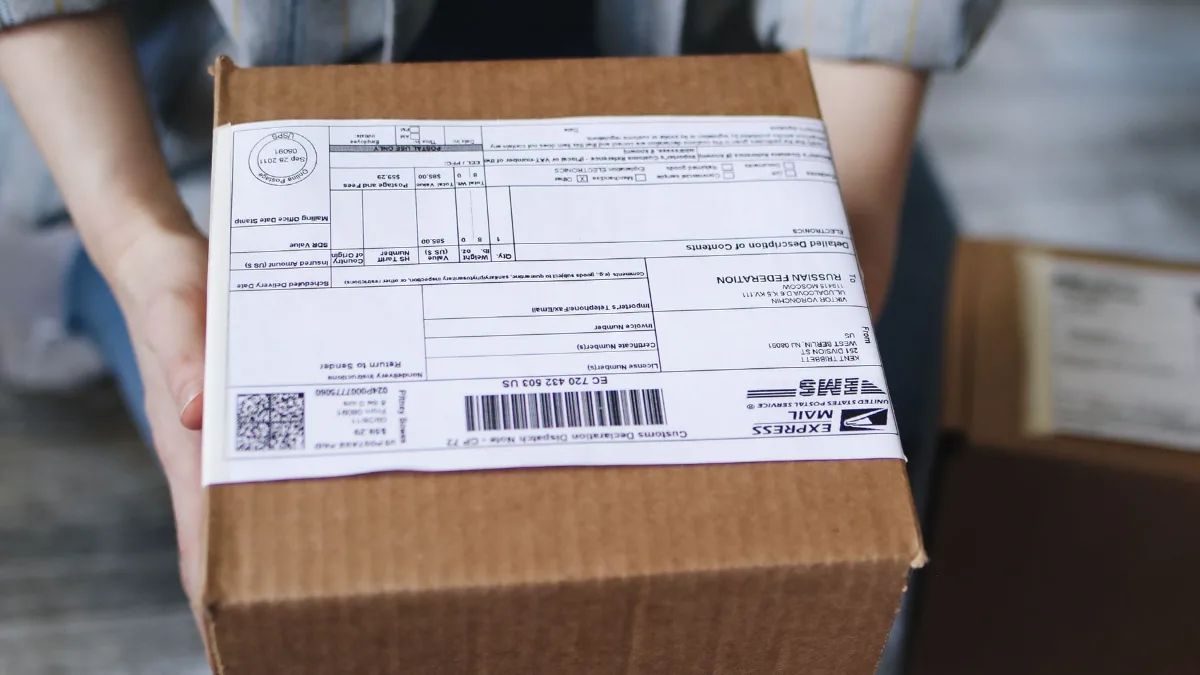
A packing slip is the sheet of paper that comes with a parcel and tells you what is in it. It lists the items, the quantities and who the order is for, and it normally shows no prices. If you have ever opened a delivery and checked the contents against a list inside the box, you have used one.
For a seller, the packing slip is a small document with a big job: it helps the warehouse pick the right items, helps the customer check what arrived and gives both sides a record if something is missing or damaged. This guide explains what a packing slip is, what it includes, how it differs from an invoice and a packing list, and how to make one. You can create one for free with the packing slip generator.
Quick answer: A packing slip lists the contents of a shipment (items, descriptions and quantities, usually no prices) along with the order number and addresses. It is included with the parcel so the receiver can check the delivery. It is not a request for payment.
Packing slip meaning and definition
The meaning of a packing slip is simple: a slip (a small sheet) that records what was packed. It is a shipping document, created by the seller or warehouse at the time an order is picked and packed, and it travels with the goods.
| Term | Plain meaning |
|---|---|
| Packing slip | A list of the contents of a parcel, included with it |
| Order number | The reference that links the slip to the customer’s order |
| Ship-to address | Where the goods are going |
| Sold-to or bill-to | Who placed or pays for the order, if different |
| SKU | The seller’s code for an item |
| Backorder | An item ordered but not shipped yet |
| Carrier | The courier or freight company delivering the parcel |
| Tracking number | The carrier’s reference for following the parcel |
You may also see it called a delivery note, a delivery docket, a packing list or a shipping slip. The names vary by country and industry, but all describe a document that says what is in the shipment.
What a packing slip is for
A packing slip does several jobs at once.
| Job | How the packing slip helps |
|---|---|
| Picking and packing | Tells the warehouse exactly what to put in the box |
| Checking | Lets the receiver compare the contents with what they ordered |
| Matching | Gives accounts a reference to match against the order and invoice |
| Evidence | Records what was sent if there is a dispute about shortages |
| Returns | Carries the order number and return instructions |
| Customs and carriers | Supports the shipping paperwork for larger or international shipments |
Because it usually carries no prices, it can also be handed to people who do not need to see the cost, such as warehouse staff, a recipient of a gift or a store receiving stock.
What a packing slip includes
A good packing slip is easy to read at a glance. These are the usual elements.
| Element | Example | Why it is there |
|---|---|---|
| The words “Packing slip” | Packing Slip | Makes the purpose clear |
| Order number | SO-10482 | Links to the order |
| Customer PO number | PO-2026-0412 | Helps the buyer’s receiving team |
| Date shipped | 14 November 2026 | When it left |
| Ship-to address | Warehouse 3, 400 Main Street, Denver, CO | Where it is going |
| Sold-to or bill-to | Northline Ltd, accounts department | Who ordered |
| Carrier and tracking | Courier Co, 1Z999AA10123456784 | How to follow it |
| Item description and SKU | Desk lamp, black, SKU DL-114 | What each line is |
| Quantity ordered | 20 | What was ordered |
| Quantity shipped | 15 | What is in this box |
| Backordered | 5, ships 21 November | What is still to come |
| Package count | Box 1 of 2 | For multi-box orders |
| Notes and return info | Return within 30 days with this slip | Practical instructions |
Packing slip, pick list and sales order
Inside a warehouse, three internal documents sit close to the packing slip. They are easy to mix up, but each has a different reader.
| Document | Who uses it | What it shows | Leaves the building? |
|---|---|---|---|
| Sales order | Sales and accounts | What the customer ordered, prices and terms | No |
| Pick list | Warehouse picker | Items and shelf locations to collect | No |
| Packing slip | Packer and customer | What is in this box | Yes, with the goods |
| Shipping label | Carrier | Address and routing | Yes, on the outside |
| Invoice | Accounts and customer | What is owed | Yes, sent separately or in the box |
The pick list is for finding the items. The packing slip is for confirming and proving what went into the box. A small seller often uses one document for both jobs, which is fine, as long as the final copy in the box shows what was actually packed, not just what was ordered.
Packing slips for different kinds of seller
The same document changes shape with the business.
| Seller | What to emphasise | Typical extra |
|---|---|---|
| Online shop, consumer orders | Friendly layout, order number, returns steps | Thank-you note, discount code for next order |
| Wholesale to retailers | Customer PO, part numbers, case quantities | Carton count, delivery signature line |
| Manufacturer to distributor | Lot or batch numbers, serial numbers | Certificates or test references |
| Craft and handmade seller | Item names the customer recognises, care notes | Handwritten message, care card |
| Subscription box | Contents for the month, ingredient or item notes | Allergen or usage information |
| Parts and repair supplier | Part numbers, fitment notes, core return | Warranty details |
| Dropshipper | Neutral branding, no supplier prices | Customer’s order number rather than yours |
A dropshipping packing slip deserves special care: it should carry only what the end customer needs, with no wholesale price or supplier details they should not see.
Paper, PDF and in-box formats
| Format | How it works | Best for | Watch out for |
|---|---|---|---|
| Printed sheet inside the box | Slip printed at packing and dropped in | Most parcel sellers | Paper waste, wrong slip in wrong box |
| Printed sheet in a pouch on the outside | A clear pouch stuck to the carton | Pallets and freight | Pouch torn off in transit |
| Printed on the shipping label sheet | Label and slip on one page | Very small items | Not enough space for long orders |
| Emailed PDF | Sent with the shipping notice | B2B, large orders | Receiver may not print it for the dock |
| Electronic data (EDI or portal) | Sent as structured data | Large retailers | Needs set-up with the customer |
If you send a PDF packing slip, name it with the order number, such as PackingSlip-SO-10482.pdf, so the receiving team can find it quickly.
Multi-box and partial shipments: a worked example
Real orders do not always go in one box on one day. Here is how packing slips handle it.
Order SO-10482: 20 desk lamps, 20 spare bulb packs, 10 ergonomic chairs. The lamps are short on stock and the chairs are bulky.
| Shipment | Box | Contents | Packing slip shows |
|---|---|---|---|
| 14 Nov | Box 1 of 2 | 15 desk lamps, 20 bulb packs | Lamps: ordered 20, shipped 15, backordered 5 |
| 14 Nov | Box 2 of 2 | 10 chairs | Chairs: ordered 10, shipped 10 |
| 21 Nov | Box 1 of 1 | 5 desk lamps | Lamps: ordered 20, previously shipped 15, shipped 5, backordered 0 |
Three principles keep this tidy:
- Number the boxes on every slip, so the receiver knows how many to expect.
- Show cumulative quantities on later shipments, so it is easy to see the order is now complete.
- Issue one invoice per shipment or one at the end, whichever your terms say, and quote the same order number on each.
If the buyer uses three-way matching, each delivery’s packing slip becomes a goods receipt, so accuracy matters. See what is a purchase order for how the PO, receipt and invoice are matched.
A packing slip example
PACKING SLIP Order no.: SO-10482 Customer PO: PO-2026-0412 Ship date: 14 November 2026 Carrier: Courier Co Tracking: 1Z999AA10123456784 Ship to: Northline Ltd, Warehouse 3, 400 Main Street, Denver, CO 80202 Sold to: Northline Ltd, Accounts, 400 Main Street, Denver, CO 80202 Package: 1 of 1
| SKU | Description | Ordered | Shipped | Backordered |
|---|---|---|---|---|
| DL-114 | Desk lamp, black | 20 | 15 | 5 |
| DL-120 | Spare bulb, 3-pack | 20 | 20 | 0 |
| CH-301 | Ergonomic chair | 10 | 10 | 0 |
Notes: 5 desk lamps are backordered and will ship by 21 November. Please check the contents on receipt and report any damage within 7 days. Returns: quote order SO-10482.
Notice that there are no prices anywhere. The receiver can check each line, see what is outstanding and know whom to contact.
Returns and the packing slip
A packing slip is also your return document. Customers who can find the order number and the return steps on the slip send fewer “how do I return this?” messages.
| Part of a return | What the packing slip provides |
|---|---|
| Identifying the order | Order number and date |
| Knowing what was sent | Item list with SKUs |
| Return window | “Returns accepted within 30 days” |
| Return address | Where to send the goods |
| Reason codes | A tick-box or list for why it is being returned |
| Refund or exchange choice | Instructions for what happens next |
Asking customers to include the slip in the return parcel makes it easy to match the returned goods to the original order. For the money side of a return, see what is a credit note.
Packing slips and international parcels
For parcels that cross borders, the packing slip is one of several documents, and it does not replace customs paperwork.
| Document | Role in an international shipment |
|---|---|
| Packing slip or packing list | Lists the contents and quantities |
| Commercial invoice | States the value and terms of the sale for customs |
| Customs declaration | Describes the goods for the border authorities, often attached to the label |
| Certificate of origin | Where the goods were made, when required |
| Proforma invoice | A value document for samples or gifts with no sale |
Customs authorities check that the packing list and the commercial invoice agree: the same items, the same quantities, a consistent description. A mismatch can delay a parcel. For the documents that carry values, read pro forma vs commercial invoice. Requirements differ by country, so check the rules for the destination or ask your carrier.
Packing slip vs invoice
The two are often confused because they both list items. The key difference is their purpose.
| Packing slip | Invoice | |
|---|---|---|
| Purpose | Says what is in the shipment | Requests payment |
| Shows prices | Usually no | Yes |
| Shows tax and totals | No | Yes |
| Sent | With the goods | At or after delivery, often separately |
| Used by | Warehouse, receiver | Accounts, buyer and seller |
| Counts as a bill? | No | Yes |
| Numbering | Order or shipment number | Invoice number in sequence |
Some small sellers combine them: a single page that lists the goods and the amounts. That works, but when the buyer’s receiving team and accounts team are different people, separate documents are cleaner. See how to make an invoice for the invoice and purchase order vs invoice for how the order, delivery and invoice fit together.
Packing slip vs packing list vs shipping label
Three shipping documents are regularly mixed up.
| Packing slip | Packing list | Shipping label | |
|---|---|---|---|
| What it is | Contents of a parcel, usually inside | A detailed contents list, often for freight or export | The carrier’s address and routing label on the outside |
| Level of detail | Items and quantities | Items, quantities, weights, dimensions, package counts | Address, barcode, service level |
| Where it goes | Inside or attached to the package | With the shipment documents | Stuck to the outside |
| Prices | Usually none | Usually none | None |
| Typical user | Parcel and ecommerce sellers | Freight, export, customs | Every carrier shipment |
In everyday use, “packing slip” and “packing list” overlap. A parcel seller says packing slip; a freight forwarder says packing list. If someone asks you for one, ask what they need it for and how much detail.
Packing slip vs delivery note and bill of lading
| Document | What it does | Who issues it |
|---|---|---|
| Packing slip | Lists the contents of a shipment | Seller or warehouse |
| Delivery note | Lists what was delivered, often signed by the receiver as proof | Seller or carrier |
| Bill of lading | A contract and receipt for carriage of goods, issued by the carrier | Carrier |
| Commercial invoice | A sale document used by customs, with values | Seller |
| Goods received note | The buyer’s record of what actually arrived | Buyer |
A delivery note and a packing slip are often the same page under different names. A bill of lading is a transport document that belongs to the carrier. For the export documents that carry values, see pro forma vs commercial invoice.
Packing slip numbers and records
A packing slip needs a reference, but not necessarily its own number series.
| Approach | Example | Good for |
|---|---|---|
| Use the order number | SO-10482 | Small sellers, single shipments |
| Order number plus shipment suffix | SO-10482-1, SO-10482-2 | Partial and multi-box orders |
| Separate packing slip sequence | PS-0551 | Larger warehouses and audits |
| Carrier shipment ID | Tracking number | Linking to the carrier record |
Keep a copy of every packing slip with the sales order and the invoice. If a customer says something was missing, the slip is your record of what you packed. How long to keep it depends on your records rules, and a sensible default is to keep it as long as you keep the invoice.
Picking, packing and checking accuracy
Most disputes about packing slips are really accuracy problems. A simple three-step discipline cuts them down.
| Step | What happens | Control |
|---|---|---|
| Pick | Items are collected from stock against the order | Scan or tick each line |
| Pack | Items are placed in the box with the slip | A second person or a scan verifies quantities |
| Check | The slip is compared with the contents before sealing | Tick “packed by” and “checked by” |
Adding a “packed by” and a date on the slip creates accountability and helps trace problems. Small teams can do this with initials in a box at the bottom of the document.
Where the packing slip fits in an order
The packing slip is one step in the order-to-cash chain.
- The customer orders, perhaps with a purchase order.
- The seller confirms the order and creates a sales order.
- The warehouse picks the items against the order.
- The packing slip is printed and placed in the box.
- The parcel ships with a shipping label and tracking number.
- The customer receives and checks the contents against the packing slip.
- The invoice is sent quoting the order or PO number.
- Payment is made, and a receipt is issued if needed.
| Step | Document | Created by |
|---|---|---|
| 1 | Purchase order | Buyer |
| 2 | Order confirmation or sales order | Seller |
| 4 | Packing slip | Seller or warehouse |
| 5 | Shipping label | Seller or carrier |
| 6 | Goods receipt | Buyer |
| 7 | Invoice | Seller |
For the buyer’s side of the same chain, read what is a purchase order.
How to make a packing slip
Making a packing slip takes a few minutes and the same information every time.
- Start from the order. Copy the order number, customer PO and the ship-to and sold-to details.
- Add the ship date and carrier. Add the tracking number if you have it.
- List the items. For each line, give the SKU, description and quantity ordered.
- Show what is shipped. Enter the quantity in this box and note anything backordered.
- Add notes. Include handling instructions, return details and contact information.
- Leave off prices unless the slip is also the invoice.
- Print or attach it. Put it in the package, in a document pouch on the outside, or send it as a PDF with the shipment notice.
- Keep a copy. File it with the order and the invoice.
The packing slip generator does this with ordered, shipped and backordered columns and a ship-to block, and downloads a PDF. It runs in your browser and does not upload your data.
Setting up a packing slip workflow for a small shop
You do not need a warehouse system to make packing slips reliable. A short routine, followed every time, does most of the work.
| Step | What to do | Who or what |
|---|---|---|
| 1. Order arrives | Check the order number, items and address | You or the shop platform |
| 2. Create the slip | Copy the order details into the packing slip | Generator or template |
| 3. Pick | Collect the items, ticking each line | The slip itself works as the pick list |
| 4. Pack | Place items and the slip in the box | The packer |
| 5. Check | Compare the box contents with the slip before sealing | A second look |
| 6. Label | Attach the shipping label and record the tracking number | The carrier’s tool |
| 7. Notify | Send the customer the tracking number | Email or platform |
| 8. File | Keep a copy of the slip with the order | Folder or spreadsheet |
Even with two or three orders a day, step 5 prevents most wrong-item complaints.
What to map from an order to a packing slip
A packing slip is mostly data copied from the order, so it helps to know where each field comes from.
| Packing slip field | Comes from | Notes |
|---|---|---|
| Order number | The order or shop platform | Use the customer-facing number |
| Customer PO | The buyer’s purchase order | Essential for B2B |
| Ship-to name and address | The delivery details on the order | Check for apartment or unit numbers |
| Sold-to or bill-to | The billing details | May differ from the ship-to |
| Ship date | The day it is handed to the carrier | Not the order date |
| Carrier and tracking | The shipping label | Add after purchasing the label |
| SKU and description | Your product catalogue | Use names customers recognise |
| Quantity ordered | The order | |
| Quantity shipped | What you actually packed | May be less than ordered |
| Notes | Gift message, delivery instructions | Keep it short |
Wording you can use on a packing slip
| Where | Wording |
|---|---|
| Header | “Packing slip. Please keep this for your records.” |
| Backorder note | “Item DL-114 is backordered and will ship by 21 November. You will not be charged shipping again.” |
| Inspection | “Please check the contents on receipt and report damage or shortages within 7 days.” |
| Returns | “To return an item, quote order SO-10482 and send it back within 30 days in original condition.” |
| Gift | “This order is a gift. Prices are not shown.” |
| Thanks | “Thank you for your order. We appreciate your business.” |
| Contact | “Questions? Email orders@example.com and quote your order number.” |
A friendly sentence or two is enough. The slip should be easy to scan, not a page of small print.
Packing slips for online sellers
If you sell through your own shop or a marketplace, the packing slip is also part of the customer experience.
| Point | Suggestion |
|---|---|
| Branding | Add your logo and a short thank-you note |
| Gift orders | Leave off prices and add the sender’s message |
| Returns | Put return steps and the order number on the slip |
| Marketplace rules | Check the platform’s requirements for what must or must not appear |
| Multiple boxes | Number the packages “1 of 3”, and list items per box |
| Language | Use the customer’s language for international orders |
| Sustainability | Consider a short slip or an emailed copy to save paper |
A friendly, clear packing slip reduces “where is my item?” messages and makes returns easier, which is worth more than a few seconds of effort.
What to do when a packing slip is wrong or missing
Things go wrong, and both sides need a simple way to fix them.
| Problem | Seller’s response | Buyer’s response |
|---|---|---|
| Items missing from the box | Check the slip against the order; ship the rest or credit | Note it on the delivery record and tell the seller quickly |
| Extra items in the box | Ask for them back or invoice them | Report them; do not use them without agreement |
| Wrong items | Collect and replace | Keep them safe and report within the stated period |
| Slip missing | Send a PDF copy | Request one so the receipt can be recorded |
| Slip shows a different quantity from the box | Investigate the pick and pack records | Count the goods and photograph the difference |
| Damaged goods | Arrange a claim with the carrier | Photograph the packaging and goods on receipt |
Keeping a copy of every slip and a note of who packed it makes these conversations short. A credit note, rather than a changed invoice, records any adjustment. See what is a credit note.
Saving paper without losing the record
Printing a slip for every box adds up. A few options reduce paper while keeping the record.
| Option | How it works | Trade-off |
|---|---|---|
| Combine the slip and the shipping label | One sheet carries both | Limited space for long orders |
| Email the packing slip | Customer receives a PDF with the dispatch notice | Not useful at a receiving dock |
| Print only for business customers | Consumers get an email | Some may still want a paper copy |
| Use half-page or small-format slips | Smaller paper, same information | Needs a layout that fits |
| Recycled paper and double-sided printing | Cuts waste without changing the process | Slightly more setup |
Whichever you choose, keep a digital copy with the order record so you can answer questions later.
Packing slips in B2B and wholesale
Business customers have stricter expectations.
| Point | What the buyer’s receiving team wants |
|---|---|
| PO number | Printed prominently, so the delivery can be matched |
| Part numbers | Their part number as well as yours |
| Quantities | Ordered, shipped and backordered for each line |
| Lot or serial numbers | For regulated or traceable goods |
| Delivery note signature | A line for the receiver’s name, date and signature |
| Package count | “Box 2 of 4” so nothing is missed |
| Packing slip per shipment | Not one slip for a multi-delivery order |
Getting these details right means the goods are booked in quickly, the invoice can be matched to the receipt and payment is not held up. See what to include on an invoice for the matching invoice.
Short answers about packing slips
| Question | Answer |
|---|---|
| Is a packing slip legally required? | Generally no for domestic parcels, but it is standard practice and often required by wholesale customers or marketplaces |
| Can I put prices on it? | Yes, if you want it to double as an invoice, but leave them off for gifts and drop-shipping |
| Should the packing slip be inside or outside the box? | Inside for parcels, in a pouch outside for pallets and freight, or both for large orders |
| Do services need a packing slip? | No. Use a work order or an invoice instead |
| Can I email the packing slip instead of printing it? | Yes, for B2B customers who accept it, but include a printed one if the receiver needs it at the dock |
| What if I ship less than ordered? | Show shipped and backordered quantities and say when the rest will arrive |
| Is a packing slip proof of delivery? | No. Proof of delivery comes from the carrier or a signed delivery note |
| Who keeps the packing slip? | The seller keeps a copy; the buyer keeps the one in the box for receiving and returns |
Common packing slip mistakes
| Mistake | Why it hurts | Fix |
|---|---|---|
| No order or PO number | The delivery cannot be matched | Print it at the top |
| Quantities missing, only item names | The receiver cannot check shortages | Show ordered and shipped |
| Prices on a gift order | Reveals the cost to the recipient | Leave prices off |
| Slip packed in the wrong box | Confusion in multi-box shipments | Number boxes and slips together |
| Backorders not shown | The customer thinks it was lost | Add a backordered column |
| No return information | Returns are slow and unclear | Add steps and a contact |
| Illegible handwritten slips | Errors and disputes | Print or use a PDF |
| No copy kept | No evidence of what was sent | File one with the order |
Minimal and full packing slip layouts
You can start simple and add detail as your orders grow.
| Part | Minimal version | Full version |
|---|---|---|
| Header | Packing slip, order number, date | Logo, packing slip, order and PO numbers, ship date |
| Addresses | Ship-to | Ship-to and sold-to, customer contact |
| Shipping | None | Carrier, service and tracking number, package count |
| Items | Description and quantity | SKU, description, ordered, shipped, backordered, lot or serial |
| Notes | None | Handling, returns, gift message, inspection period |
| Footer | None | Packed by, checked by, signature line for the receiver |
Choose the minimal version for simple consumer orders and the full version for trade customers, regulated goods or multi-box shipments.
Words you will see on packing slips
| Term | Meaning |
|---|---|
| Ordered | The quantity the customer asked for |
| Shipped | The quantity in this package or shipment |
| Backordered | Ordered but not available yet, to ship later |
| Cancelled | Removed from the order and will not ship |
| UOM | Unit of measure, such as each, box or case |
| Lot or batch | A production batch number for traceability |
| Serial number | A unique identifier for an individual item |
| Bill of lading | The carrier’s transport document |
| Consignee | The party receiving the goods |
| Drop ship | Shipped directly from a supplier to the customer |
| RMA | A return merchandise authorisation number for a return |
Knowing these terms helps when a trade customer or a carrier uses them and you want to reply clearly.
Three small upgrades that customers notice
| Upgrade | What to do | Effect |
|---|---|---|
| Plain language item names | Use the name the customer saw on your site, not an internal code | Fewer “what is this?” messages |
| A visible order number and contact line | Put them in the top corner, large enough to read | Faster support and returns |
| A “what happens next” line | Say how to return, exchange or get help | Reduces anxiety and repeat questions |
A monthly packing slip audit
Once a month, pull five recent orders and compare the slip, the order and the invoice.
| Check | What you are looking for |
|---|---|
| Quantities | Slip shipped matches the order and invoice, or the difference is explained |
| Addresses | Ship-to on the slip equals the address on the label |
| Numbers | Order number and PO appear on all three documents |
| Backorders | Anything not shipped is shown and was followed up |
| Returns | Returned items match the slip that was sent |
A five-order audit takes ten minutes and finds the kind of small recurring errors that otherwise only surface through complaints.
A packing slip checklist
| Check | Done |
|---|---|
| Document titled “Packing slip” | |
| Order number and customer PO | |
| Ship date, carrier and tracking | |
| Ship-to and sold-to details | |
| Each item with SKU, description and quantity | |
| Shipped and backordered quantities | |
| Package number (“1 of 2”) | |
| Notes and return instructions | |
| No prices, unless intentionally included | |
| Copy filed with the order |
Make a packing slip now
Open the packing slip generator, enter the ship-to details and the items with ordered and shipped quantities, and download a clean PDF. Use the invoice generator for the matching invoice and the purchase order generator if you are the buyer.
This guide is general information and is not legal or customs advice.
Frequently asked questions
What is a packing slip?
A packing slip is a document that goes with a shipment and lists what is inside the package: the items, descriptions and quantities, usually without prices. It lets the receiver check the delivery against what they ordered.
What is the difference between a packing slip and an invoice?
A packing slip says what was shipped and normally shows no prices. An invoice requests payment and shows prices, tax and totals. They often travel together or are sent separately.
What is the difference between a packing slip and a packing list?
The terms are often used for the same thing. A packing list is usually the more detailed version used for freight and export, with weights, dimensions and package counts, while a packing slip is the simple list inside a parcel.
What should a packing slip include?
The order number, ship-to and sold-to details, the ship date, the carrier or tracking number, each item with a description, SKU and quantity, any backordered items, notes and return instructions.
Does a packing slip show prices?
Usually not. Leaving prices off lets the package be handed to someone, such as a gift recipient or a warehouse worker, without revealing the cost. Some sellers add prices when the packing slip doubles as an invoice.
Do I need a packing slip for every order?
It is good practice for any physical shipment, and many marketplaces and wholesale customers expect one. Digital goods and services do not need it.
Who creates the packing slip?
The seller or the warehouse that packs the order creates it, from the customer's order, and puts it in or on the package.
Is a packing slip the same as a delivery note?
Mostly yes. Delivery note is the common term in the UK and parts of Europe, and packing slip is more common in North America. Both list what was delivered.
Related guides

Purchase Order vs Invoice: The Difference
A purchase order authorizes a purchase; an invoice requests payment. Learn the differences, the document order, three-way matching and what to include.
What Is a Purchase Order? Meaning and Example
What a purchase order (PO) is, what it includes, a worked example, the types of PO, how the process works and how a PO differs from an invoice or quote.

What Is an Invoice? Meaning, Types, Examples
What is an invoice? Learn what it means, what it includes, the main types and how it differs from a bill or receipt, with clear examples.
Invoice vs Receipt vs Bill: The Difference
An invoice asks for payment, a receipt confirms it and a bill is the buyer's word for an invoice. Learn when to use each, with examples.