
How to Write a Receipt: What to Include
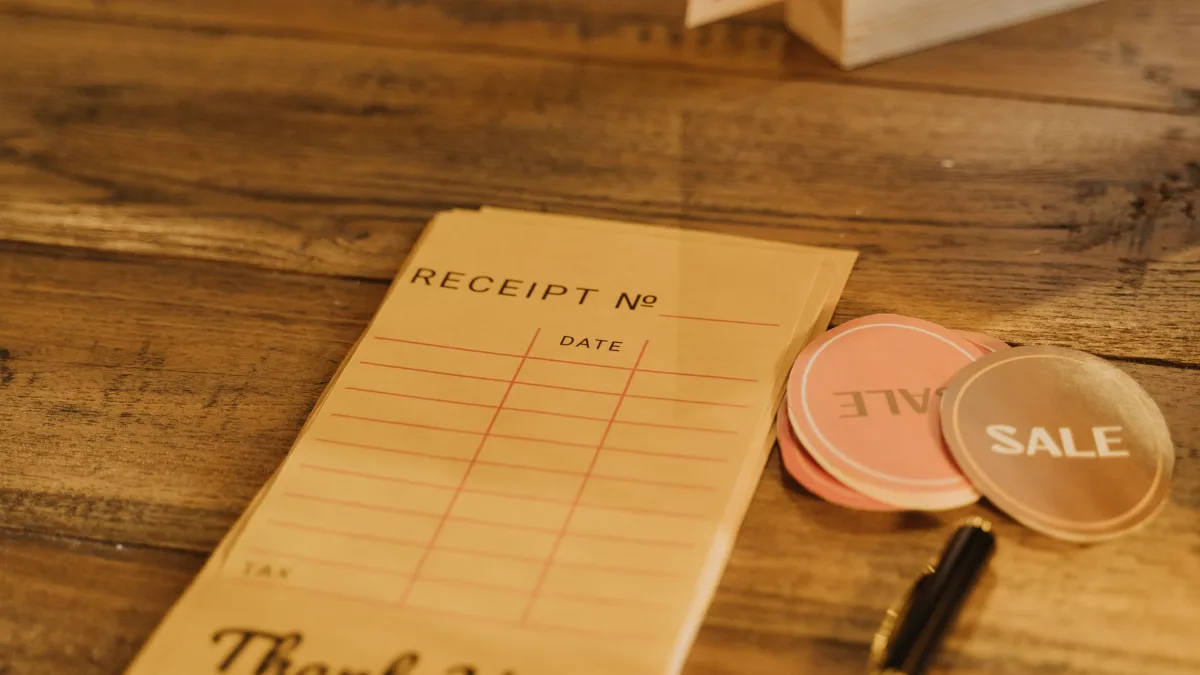
In this guide
- What a receipt is for
- What to include on a receipt
- How to write a receipt, step by step
- Receipt examples
- How to write a handwritten receipt
- How to give a receipt for a payment
- Receipts for different payment methods
- How to write a proof of payment receipt
- Receipt numbering
- Receipts in everyday business situations
- Receipts, tax and record keeping
- Digital receipts: sending and storing
- Combined documents: sales receipts and paid invoices
- Genuine receipts only
- Questions people ask
- Mistakes to avoid
- A receipt checklist
- Three layouts you can copy
- What to write on the “for” line
- Amounts, currency and words
- Refunds, returns and corrections
- Receipts for expense claims and lost receipts
- How long to keep receipts
- Keeping receipts safe and trustworthy
- A simple receipt workflow
- Other documents called “receipt”
- Who needs to give receipts, and when
- Receipt design: what makes one easy to read
- Receipts for deposits and non-refundable payments
- Automating receipts
- Receipts and customer service
- Receipt wording by profession
- Receipts and tax: a few practical points
- Common receipt mistakes and how to avoid them
- Final checks before you send a receipt
- Make one now
A receipt is a written confirmation that a payment has been received. It protects both sides: the payer can prove they paid, and the seller has a record of income that matches the sale. Writing a good one takes a minute if you know which details to include and in what order.
This guide shows you exactly what a receipt needs, how to write one step by step by hand or on screen, gives examples for the common payment methods, and explains the numbering, tax and record-keeping around it. If you want to make one now, the free receipt generator takes a couple of minutes and runs in your browser with no account.
Quick answer: A receipt should show a receipt number, the date paid, who received and who paid, what the payment was for, the amount and currency, the payment method and any tax. If it settles an invoice, add the invoice number.
What a receipt is for
A receipt answers one question: has this been paid? It does several jobs at once.
| Who | What the receipt does for them |
|---|---|
| The person who paid | Proves they met their obligation; supports returns, warranties and expense claims |
| The person who was paid | Records the income and ties it to the sale or invoice |
| The accountant or bookkeeper | Provides evidence for the books and the bank reconciliation |
| The tax authority | Supports the amounts reported, especially for expenses and income |
A receipt is different from an invoice. An invoice asks for money; a receipt confirms it was received. If you are unsure which you need, read invoice vs receipt vs bill.
What to include on a receipt
These are the details a complete receipt contains.
| Element | Required? | Notes |
|---|---|---|
| The word “Receipt” | Yes | So it cannot be mistaken for an invoice |
| Receipt number | Yes | Unique, in sequence |
| Date paid | Yes | The date the money was received, not the date written |
| Name of the person who received the payment | Yes | Your business name and contact details |
| Name of the person who paid | Yes | The customer or client |
| What the payment was for | Yes | A short description, or the invoice number |
| Amount received and currency | Yes | In figures, and in words for cash |
| Payment method | Yes | Cash, bank transfer, card, cheque, online |
| Payment reference | Recommended | Transaction ID, last four digits, cheque number |
| Tax | If it applies | Rate and amount, and your tax number if registered |
| Balance remaining | If part payment | What is still owed |
| Signature | Optional | Useful for handwritten receipts |
Most small business receipts need nothing more than this. For the matching invoice side, see what to include on an invoice.
How to write a receipt, step by step
- Write “Receipt” at the top and give it a number.
- Add the date the payment was received.
- Say who was paid and who paid, with names and, if useful, addresses.
- Describe what it was for. “Payment for invoice 0042” or “Two hours of tutoring, 9 October”.
- State the amount and the currency.
- State the payment method and any reference.
- Show tax, if it applies, and any balance still owed.
- Sign or stamp it if it is paper, and give the payer a copy.
- Keep a copy with the invoice or sale record.
On screen, the same order applies. The receipt generator has fields for each of these and produces a PDF named after the person who paid.

Receipt examples
A receipt for a bank transfer paying an invoice
Receipt R-2026-017 Date paid: 26 October 2026 Received by: Mia Torres Photography Received from: Northwind Cafe For: Payment of invoice 0042, half-day photography shoot and editing Amount received: $720.00 USD Method: Bank transfer, reference “Invoice 0042” Balance remaining: $0.00
A receipt for a cash payment
Receipt 0023 Date: 9 October 2026 Received from: Sam Rivera For: Two hours of maths tutoring, 9 October Amount received: $80.00 (eighty dollars) Method: Cash Signed: A. Patel
A receipt for a deposit
Receipt D-014 Date: 2 October 2026 Received from: Awasi Umar Ltd For: 30% deposit on quote QT-2026-021, website design Amount received: $726.00 Method: Card, ending 4412 Balance remaining: $1,694.00, due on completion
A receipt with tax
Receipt 5581 Date: 12 October 2026 Received from: Blue Door Studio For: Studio hire, 4 hours at $60 Subtotal: $240.00. Sales tax (8%): $19.20. Total received: $259.20 Method: Debit card. Tax registration: 12-3456789
How to write a handwritten receipt
Many small sellers and individuals still use a receipt book. A handwritten receipt is perfectly valid if it contains the required details and is genuine.
How to write a handwritten receipt in six steps:
- Write the word Receipt and the receipt number at the top.
- Add today’s date and your name or business name and address.
- Write who paid: the customer’s name.
- Say what the payment was for, with the invoice or order number if there is one.
- Write the amount received in figures and in words, and how it was paid (cash, card, transfer or cheque).
- Sign it, and keep a copy.
A handwritten receipt can be as short as this:
Receipt No. 0147 14 November 2026 Received from Sam Carter the sum of Two hundred and fifty dollars ($250.00) in cash, for design work, invoice 0042. Balance remaining: $0.00. Signed: Maya Chen
Some practical points:
- Use a numbered book with duplicates. The printed numbers make the sequence obvious.
- Write clearly, in ink, and do not leave blank lines that could be filled in later.
- Write the amount in words as well as figures, especially for cash.
- Sign and date it.
- Keep the carbon copy or take a photo of the receipt.
- Do not alter it. If you make a mistake, void the receipt and write a new one.
If you issue receipts often, a typed or PDF receipt is easier to read, search and store, and you cannot lose the page.
How to give a receipt for a payment
Giving a receipt is mostly about timing and the right channel. Whatever the method, the customer should leave with something they can keep.
| How the payment was made | How to give the receipt | When |
|---|---|---|
| Cash, in person | A handwritten or printed receipt handed over, with a copy kept | At the moment you take the money |
| Card, in person | The card terminal’s printed or emailed receipt, plus a fuller receipt if the customer asks | Immediately |
| Bank transfer | A PDF receipt sent by email, quoting the invoice number and the transfer reference | Once the money has arrived, not when it was sent |
| Online payment | The platform’s automatic receipt, plus your own if you need to add details | At payment |
| Cheque | A receipt marked “cheque received”, then a final receipt when it clears | On receipt, then when cleared |
| Part payment or deposit | A receipt for the amount paid, showing the balance still due | At the moment of payment |
To give a receipt for a payment, follow this short routine:
- Check the money has arrived. A receipt confirms payment received, so do not issue it for a promise or a transfer that is still pending.
- Write or generate the receipt with the date, amount, method, what it was for and a number.
- Match it to the invoice. Quote the invoice number so both documents can be filed together.
- Hand it over or send it the same day, and keep a copy.
If you need a quick, clean receipt, the receipt generator makes a PDF in a minute and keeps nothing on a server.
Receipts for different payment methods
The payment method changes a detail or two.
| Method | What to include | Watch out for |
|---|---|---|
| Cash | The amount in words, a signature and your copy | No bank trail, so the receipt is your evidence |
| Bank transfer | The date it arrived and the reference | Issue it after the money clears, not when it is sent |
| Card | The last four digits or the transaction ID | Do not write the full card number |
| Cheque | The cheque number and the bank | Wait for clearance before marking as paid |
| Online or wallet | The transaction ID | Match to the platform statement |
| Part payment | The amount received and the balance | State what is still owed |
Whatever the method, issue the receipt for the money actually received.
How to write a proof of payment receipt
A proof of payment is a receipt, or a similar document, that shows that a specific amount was paid, by whom, to whom, on what date and for what. People ask for one to support an expense claim, a landlord or lender’s request, a tax record or a dispute about whether a bill was settled.
A strong proof of payment shows:
| Element | Example |
|---|---|
| Title | “Receipt” or “Proof of payment” |
| Payer’s name | Sam Carter, Northline Ltd |
| Payee’s name and contact | Maya Chen Design, maya@example.com |
| Date of payment | 14 November 2026 |
| Amount, in figures and words | $1,200.00, one thousand two hundred dollars |
| Payment method and reference | Bank transfer, reference INV-0042 |
| What it was for | Invoice 0042, brand guidelines |
| Balance after payment | $0.00 |
| Signature or transaction ID | Signed, or the bank’s transaction number |
You can strengthen it with supporting evidence, such as a bank statement line or the transfer confirmation. Wording that works well is plain: “Received from Northline Ltd the amount of $1,200.00 on 14 November 2026 by bank transfer, reference INV-0042, in full payment of invoice 0042.”
A proof of payment is only worth something if it is true. Never issue one for money you have not received, and never alter one afterwards. See the section on genuine receipts below for why that matters.
Receipt numbering
Give every receipt a unique number so you and the customer can refer to it. A simple running sequence works: R-2026-001, R-2026-002 and so on, or just 1, 2, 3. Rules are the same as for invoices: never reuse a number, avoid unexplained gaps and keep the format consistent. The guide to invoice number formats explains the patterns, and the same ideas apply to receipts. Always quote the invoice number that the receipt settles, so the two documents can be matched.
Receipts in everyday business situations
The details of a good receipt change slightly with the situation. These are the cases people ask about most.
Freelancers and consultants. Issue a receipt when a client pays an invoice, if they ask for one or if your records need it. Quote the invoice number, the date the money arrived and the method. If the client paid in several instalments, issue a receipt for each payment and show the balance.
Tutors, coaches and small services. Payments are often small and frequent. A monthly receipt that lists the sessions covered (“Tutoring, 4 sessions in October, $320”) is easier than a receipt per lesson.
Landlords and tenants. A rent receipt should state the period covered (“Rent for November 2026”), the property address, the amount and the method. Tenants may need it as proof of payment.
Selling a used item. A simple receipt that names the item, the price, the date and both parties protects both sides. For a vehicle or valuable item, also include identifying details such as the serial number and a statement that it was sold as seen.
Deposits and advance payments. Say clearly that it is a deposit and what it is for, whether it is refundable and when the balance is due. This avoids disputes about what the money covered.
Donations and gifts. A charity’s receipt may need specific wording to support a tax deduction; follow the rules of your country. A private gift receipt is just a record of who gave what.
Online sales. An emailed receipt confirms the order and the payment. If a business customer needs to claim tax, they will need an invoice with your tax number as well.
Receipts, tax and record keeping
Receipts support the records your tax authority expects you to keep. The general ideas are similar across countries, though the details differ:
- Income. Records of what you were paid, when and by whom. A receipt, a paid invoice or a bank record can support this.
- Expenses. To claim a business expense, you generally need evidence of what was bought, from whom, when, for how much and for what business purpose. The receipt is the usual evidence.
- Sales tax, VAT and GST. If you charge tax, show the tax on the receipt or the invoice. A buyer who is registered may need an invoice with your tax number, not just a receipt.
- Retention. Keep them for as long as the rules in your country require, often several years. In the United States, the IRS generally advises keeping records for at least three years after you file, and longer in some cases.
If you are not sure what applies to you, ask your accountant or check your tax authority’s guidance. Keep receipts in a place you can search, with clear file names such as Client_receipt_R2026-017.pdf.
Digital receipts: sending and storing
Most receipts are now sent as PDFs by email or message. A few habits keep digital receipts reliable.
- Send a PDF, not a screenshot, so the text is readable and cannot be changed by accident.
- Name the file well. Include the client and the receipt number.
- Put the key facts in the email: amount, date and what it settles.
- Keep your copy in a folder with the invoice.
- Back up your files. A copy in your inbox only is not enough.
- Do not include sensitive data. Never print a full card number or a security code.
A browser tool such as Invoicz creates the PDF on your device and also keeps a history of the documents you downloaded, so you can reopen one and download it again. It is not a filing system, so store your PDFs somewhere permanent as well.
Combined documents: sales receipts and paid invoices
You do not always need two documents. Two common shortcuts are accepted in practice.
- A sales receipt lists the items and shows that they were paid for at the time. It is common in shops and for small services where payment happens on the spot.
- A paid invoice is an invoice marked “Paid”, with the payment date and method. It saves creating a second document when the customer only needs confirmation.
Use a separate receipt when a payment covers several invoices, when it is a part payment, or when the customer asks for one. Otherwise, one clear document is fine. For the whole comparison, see invoice vs receipt vs bill.
Genuine receipts only
A receipt is a statement of fact: this payment was received. Create one only for a payment that actually happened, for the amount and date it happened. Receipts that misstate what was paid, or that were created for a transaction that never took place, can be fraud and can have serious legal consequences. If you lost a receipt for a real payment, ask the seller to reissue a copy, and keep the bank record as backup. This is also why Invoicz provides generators for genuine business documents only.
Questions people ask
Do I need to sign a receipt? It is not required for a typed or PDF receipt, but a signature helps with cash and handwritten receipts.
Should a receipt show the payer’s address? If it is useful, yes. For business clients it helps with matching; for private individuals a name is often enough.
What if someone asks for a receipt after the event? Issue it with today’s date as the date written, and the original date as the date paid. Do not backdate the document.
Can I issue a receipt in another currency? Yes. State the currency and, if relevant, the amount you actually received after conversion.
What if the payment was made by a third party? Name the person who paid and, if useful, the person on whose behalf they paid.
How long should I keep receipts? For as long as your tax rules require, which is commonly several years, and for warranty items for as long as the warranty runs.
Mistakes to avoid
| Mistake | Why it matters | Fix |
|---|---|---|
| Writing the receipt before the money arrives | The record is wrong and may mislead | Issue it when funds are received |
| No receipt number | Cannot be tracked | Number every receipt |
| No indication of what it was for | Useless as evidence | State the purpose or invoice |
| Writing the full card number | A security risk | Use the last four digits |
| Leaving blanks | Can be altered | Fill every line or strike it through |
| Editing a receipt after issue | Mismatched copies | Void it and issue a new one |
| Forgetting tax | Wrong records | Show the tax if it applies |
| Making a receipt for a payment that did not happen | It can be fraud | Only for real payments |
A receipt checklist
| Check | Done |
|---|---|
| “Receipt” clearly titled and numbered | |
| Date the payment was received | |
| Who was paid and who paid | |
| What it was for, or the invoice number | |
| Amount and currency | |
| Payment method and reference | |
| Tax and balance, if relevant | |
| A copy kept for my records |
Three layouts you can copy
You can write a receipt in plain text in an email, on a pad or as a document. These three layouts cover most needs.
Layout 1: a short receipt for an invoice payment
Receipt R-2026-017 Date paid: 26 October 2026 From: Northwind Cafe. To: Mia Torres Photography. For: payment of invoice 0042. Amount received: $720.00 by bank transfer (ref. Invoice 0042). Balance: $0.00.
Layout 2: an itemised receipt for goods
| Item | Qty | Price | Total |
|---|---|---|---|
| Printer paper A4, box of 5 reams | 4 | $24.00 | $96.00 |
| Toner cartridge | 1 | $62.00 | $62.00 |
| Subtotal | $158.00 | ||
| Sales tax (8%) | $12.64 | ||
| Total paid | $170.64 |
Paid by card ending 4412 on 12 October 2026. Receipt 5581.
Layout 3: a receipt with a balance
Receipt D-014. Date: 2 October 2026. Received from Awasi Umar Ltd the sum of $726.00 as a deposit towards quote QT-2026-021, website design (total $2,420.00). Method: card. Balance outstanding: $1,694.00, due on completion.
You can reproduce each of these with the receipt generator: enter who paid, the amount, the date, the method and a note, and add items if you want an itemised version.
What to write on the “for” line
The line that says what the payment was for is where many receipts are weak. A good description is specific enough to match the sale.
| Situation | Weak | Better |
|---|---|---|
| Services | Payment | Website maintenance, October 2026 |
| Goods | Sale | 12 cedar fence panels, order 7731 |
| Invoice | Invoice paid | Payment of invoice 0042, dated 14 October |
| Deposit | Deposit | 30% deposit on quote QT-2026-021 |
| Rent | Rent | Rent for 14 Garden Row, November 2026 |
| Tuition | Lesson | Four 1-hour maths lessons, 5 to 26 October |
Use the same reference the other side uses, whether it is an invoice number, an order number or a booking code, so the receipt can be matched without a question.
Amounts, currency and words
Small details make a receipt more reliable.
- Write the currency. ”$” can mean many currencies; add USD, CAD, AUD or GBP where it could be unclear.
- Use the same decimal places throughout, for example two.
- Write cash amounts in words as well as figures, because words are harder to alter: “$80.00 (eighty dollars)”.
- Show the amount actually received. If a bank fee reduced a transfer, state what arrived and, if relevant, what was owed.
- For foreign payments, state the currency paid and, if you convert, the amount received and the rate used.
- Do not round in the receipt unless the original amount was rounded.
Refunds, returns and corrections
A receipt records a payment. When money goes the other way, you need a record too.
| Situation | Document | What it should show |
|---|---|---|
| Full refund | Refund receipt or credit note | The original receipt or invoice number, the amount refunded, the date and the method |
| Partial refund | Refund receipt or credit note | The portion refunded and the remaining balance |
| Receipt issued in error | Void the receipt and issue a corrected one | A note of why and the new number |
| Overpayment returned | Refund receipt | Original payment, the excess and the amount returned |
| Return of goods | Credit note and refund | The goods returned and the amount credited |
Do not alter the original receipt. Issue a new document that refers to it. For corrections to invoices, the standard tool is a credit note; see what a credit note is.
Receipts for expense claims and lost receipts
If you are the one claiming an expense, an employer or tax authority will want a receipt that shows the supplier, the date, the amount and what it was for. A card slip or a bank statement alone often does not show the items.
If you lose a receipt:
- Ask the supplier for a duplicate. Most businesses can reissue one from their records.
- Use the order confirmation or an emailed invoice if you bought online.
- Keep the bank or card statement as evidence of payment.
- Write a short note with the date, supplier, amount and purpose, and keep it with the statement.
- Check your employer’s or authority’s rules on missing receipts; some accept a signed declaration for small amounts.
Never recreate a receipt yourself for a purchase you cannot document. That crosses from record-keeping into fabrication.
How long to keep receipts
The period depends on the country and on the type of record. These are general figures from official guidance, which you should confirm for your own case.
| Country | General retention for business records |
|---|---|
| United States | The IRS generally advises keeping records at least three years after you file the return, and longer in some situations |
| United Kingdom | Self-employed: at least five years after the 31 January submission deadline for the tax year; VAT records: six years |
| Canada | Six years from the end of the last tax year to which the records relate |
| Australia | Five years from when the record was prepared or the transaction completed, whichever is later, and longer for some records |
If a tax enquiry or dispute is open, keep the records until it is resolved. If in doubt, keep them longer; a folder of PDFs takes up very little space.
Keeping receipts safe and trustworthy
Because a receipt is evidence, how you store and handle it matters.
- Store the original file, not a photo of a screen, whenever possible.
- Name files consistently so they sort:
2026-10-26_NorthwindCafe_receipt_R017.pdf. - Back up to a second location.
- Do not edit an issued receipt. Issue a new one.
- Share carefully. A receipt can reveal a name, an address and a payment method; send it only to the person it concerns.
- Check incoming receipts. If one looks altered or the details do not match your records, ask the sender.
A consistent, boring filing habit is the best defence against disputes and the quickest way to prepare for tax time.
A simple receipt workflow
Here is a routine that takes a couple of minutes a week.
- When money arrives, match it to the invoice using the reference or amount.
- Mark the invoice paid in your log and note the date.
- Create the receipt if the customer asked for one, or if your policy is to issue one for every payment.
- Send it by email with the invoice number in the subject.
- File it next to the invoice with the same client and number in the file name.
- Reconcile monthly against your bank statement so every deposit has a record.
Doing this weekly keeps you ahead. Doing it once a quarter means a long afternoon of detective work.
Other documents called “receipt”
The word is used in several other ways, which can be confusing when you search for one.
| Term | What it means | Not to be confused with |
|---|---|---|
| Goods received note (GRN) | A buyer’s record that goods arrived and in what condition | A payment receipt |
| Acknowledgement of receipt | A statement that a document or item was received | Proof of payment |
| Proof of delivery (POD) | A signed record that goods were delivered | A receipt for money |
| Cash register receipt | The slip a till prints for a retail sale | A formal business invoice |
| Statement | A summary of invoices and payments over a period | A receipt for one payment |
| Remittance advice | A note from the payer that says which invoices they have paid | A receipt from the payee |
If you are asked for “a receipt”, ask what it is for. A buyer who wants to claim a tax credit needs an invoice; a buyer who wants to return an item needs proof of purchase; a landlord needs proof that rent was paid. The right document depends on the purpose.
Who needs to give receipts, and when
Rules differ, but the common patterns are:
- Retail and consumer sales. Many countries require businesses to provide a receipt or invoice on request, and some require it for every sale above a threshold.
- Business-to-business sales. The invoice is the main document. A receipt is given if the customer asks, or if your policy is to confirm payments.
- Cash payments. Giving a receipt is strongly advisable, because cash leaves no other trace.
- Rent and deposits. Many places expect a landlord to give a receipt for rent paid in cash and for deposits.
- Donations and fundraising. Charities issue receipts that follow specific rules if donors claim a deduction.
- Professional services. Fees paid are usually evidenced by an invoice marked paid or a separate receipt.
If you are unsure, giving a receipt costs you very little and removes doubt for the customer. Check the specific rule for your country and your type of business.
Receipt design: what makes one easy to read
A receipt is usually read quickly, often on a phone. A few design choices help.
- Put the title and number at the top so the document is recognisable.
- Show the amount prominently, in a block of its own.
- Group the details (who, what, when, how) in a consistent order.
- Use a plain font and enough space; avoid backgrounds that print badly.
- Add a logo if you have one, so the receipt is identifiable as yours.
- Keep it on one page.
- Make it easy to file, with a clear file name.
The receipt generator uses a simple layout with a header strip and offers a portrait and a wider landscape format.
Receipts for deposits and non-refundable payments
A receipt for a deposit is also a record of what was agreed about it. To avoid later disputes, say on the receipt:
- What the deposit is for and the total price.
- Whether it is refundable, and under what conditions.
- When the balance is due.
- What happens if the customer cancels.
- Whether the deposit will be credited against the final invoice.
For example: “Deposit of $726.00 received towards quote QT-2026-021. The deposit is non-refundable after 14 days from this receipt and will be credited against the final invoice.” Clear wording protects both sides, and it needs to match your quote or contract.
Automating receipts
If you issue many receipts, automate the routine so each takes seconds.
- Save your business details once, so the sender fields are filled in.
- Use a numbering system that increments for you.
- Create a receipt from the invoice by copying the number and amount.
- Use a template email with the receipt attached.
- Keep a log of receipts alongside invoices.
In a browser generator like Invoicz, your business details, logo, currency and layout are saved on your device and the next number is suggested when you start a new document, so a receipt is a matter of entering who paid and how much. If you need receipts at high volume, consider accounting or payment software that creates them automatically.
Receipts and customer service
A clear receipt is also a small piece of customer service. It tells the customer that you are organised and that you value the record. Some simple touches help:
- A short thank-you note on the receipt.
- A contact email for questions.
- A clear returns or warranty line for goods.
- The next step if there is one, such as “Your balance is due on 14 November”.
Customers often keep a receipt for years and refer back to it, so these details are read more than you might expect.
Receipt wording by profession
If you are not sure how to word the “for” line and the notes for your own work, these examples show the level of detail that works.
| Profession | “For” line | Note |
|---|---|---|
| Photographer | Wedding photography, 8 hours, 12 September, edited gallery delivered | Image licence as per contract |
| Plumber | Replacement of kitchen mixer tap, labour and parts, 14 Garden Row | Parts carry a 12-month warranty |
| Tutor | Four maths lessons, 5 to 26 October | Next block starts 2 November |
| Landlord | Rent for flat 2B, 10 Harbor Street, November 2026 | Next payment due 1 December |
| Seller of a used item | Sale of a used mountain bike, serial no. ABC123, sold as seen | No returns or warranty |
| Event organiser | Deposit for venue hire, 20 December, 60 guests | Balance due 7 December |
| Web designer | Final payment for website project, invoice 1042 | Hosting renews on 1 March |
Receipts and tax: a few practical points
Tax is where receipts earn their keep, so a few practical points are worth stating.
Show tax separately where it applies. If the sale includes sales tax, VAT or GST, show the amount and the rate. Buyers who are registered for the tax often need it.
Do not charge tax you should not. If you are not registered, do not show a tax line or a tax number.
Keep the invoice with the receipt. For a registered buyer, the invoice carries your tax number and the breakdown, and the receipt proves payment.
Match your receipts to your income records. At year end, the total of your receipts and paid invoices should agree with your bank deposits, allowing for fees and timing.
Distinguish personal and business payments. A receipt for a private sale is not business income in the same way. If you are unsure how to treat it, ask your accountant.
Keep exchange-rate evidence for foreign payments. If you receive foreign currency, keep the bank record that shows the amount actually credited.
These are general points rather than advice for your country. For specifics, read the guidance of your tax authority or ask an accountant.
Common receipt mistakes and how to avoid them
A receipt is simple, so small errors stand out. These are the ones that cause the most follow-up questions.
| Mistake | What goes wrong | Fix |
|---|---|---|
| No date | The payment cannot be placed in a period | Always show the date paid |
| Missing payment method | Hard to match with a bank or card statement | State cash, card, transfer or cheque |
| Vague description | The customer cannot tell what was paid for | Name the item or the invoice number |
| Wrong total | Tax and totals do not match | Check the arithmetic before saving |
| Duplicate numbers | Two receipts share a number | Number them in sequence |
| No seller details | The customer cannot claim or contact you | Add name, address and contact |
| Calling an unpaid document a receipt | Misleading and may cause disputes | Use an invoice until the money has arrived |
Re-reading the receipt once, as the customer would, catches most of these in seconds.
Final checks before you send a receipt
- Is the amount the amount that actually arrived?
- Is the date the day it arrived?
- Does the “for” line match the invoice or sale?
- Is the number unique?
- Is the payment method correct?
- Is the tax shown, if it applies?
- Is the balance, if any, shown?
- Is the file named so you can find it later?
If all eight are right, you have a receipt that will stand up as a record on both sides.
Make one now
When you are ready, open the receipt generator, add who paid and how much, and download the PDF. For the invoice that usually comes first, use the invoice generator, and for the full comparison of the documents, read what an invoice is.
Frequently asked questions
What should a receipt include?
A receipt number, the date paid, who received the payment, who paid, what the payment was for, the amount and currency, the payment method and, if tax applies, the tax amount. Add the invoice number if it settles an invoice.
How do I write a receipt by hand?
Use a receipt book or a plain sheet. Write the date, the receipt number, the payer's name, the amount in numbers and words, what it was for, the method and sign it. Keep a duplicate copy with a carbon sheet or a photo.
Is a handwritten receipt valid?
Yes, if it contains the required details and is genuine. Many small businesses and individuals use handwritten receipts. A typed or PDF receipt is easier to read, store and match to your records.
Do I have to give a receipt for every payment?
Rules vary by country and by type of sale. Many places require a receipt on request or for certain sales, and tax authorities expect you to keep records of income. Giving one is good practice even where it is not required.
What is the difference between a receipt and an invoice?
An invoice asks for payment. A receipt confirms that payment was received. The invoice usually comes first and the receipt after the money arrives.
Can I make a receipt for a cash payment?
Yes. State that it was paid in cash, the amount received, the date and what it was for, and give the customer a copy. Keep a copy yourself, since cash leaves no bank record.
How do I number receipts?
Use a simple running sequence such as R-2026-001 or just 1, 2, 3. Never reuse a number, and quote the invoice number the receipt settles.
Can I make a receipt on my phone?
Yes. A browser-based generator works on a phone: enter who paid, the amount, the date and the method, then save the PDF and send it.
How do I write a handwritten receipt?
Write the word Receipt and a number, the date, who paid, what the payment was for, the amount in figures and words, the payment method, and sign it. Keep a copy.
How do I give a receipt for a payment?
Confirm the money has arrived, then hand over or send a receipt the same day showing the date, amount, method, what it was for and a reference to the invoice. Keep a copy for your records.
Related guides
Invoice vs Receipt vs Bill: The Difference
An invoice asks for payment, a receipt confirms it and a bill is the buyer's word for an invoice. Learn when to use each, with examples.
What Is an Invoice? Meaning, Types, Examples
What is an invoice? Learn what it means, what it includes, the main types and how it differs from a bill or receipt, with clear examples.
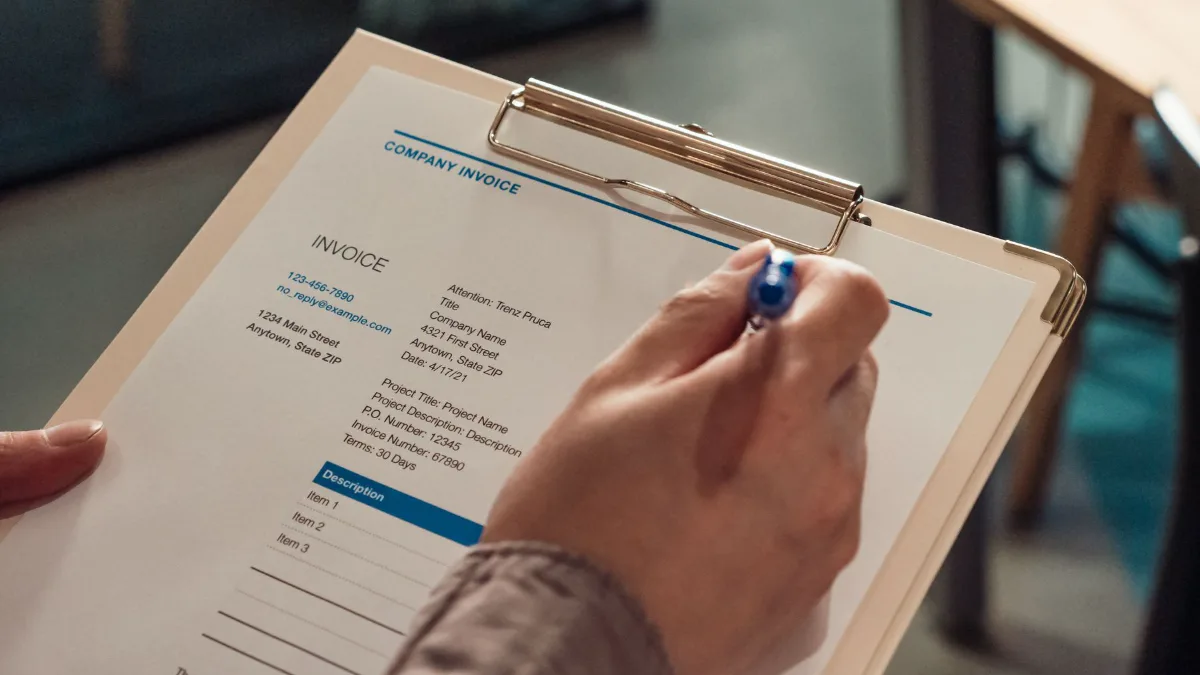
How to Make an Invoice: Step-by-Step Guide
Learn how to make an invoice in 8 clear steps: what to include, how to number it, set payment terms, add tax and send it to get paid on time.
What to Include on an Invoice: Checklist
Every element a professional invoice needs, from numbers and dates to tax and payment terms, with UK, US, Canada and Australia notes.